

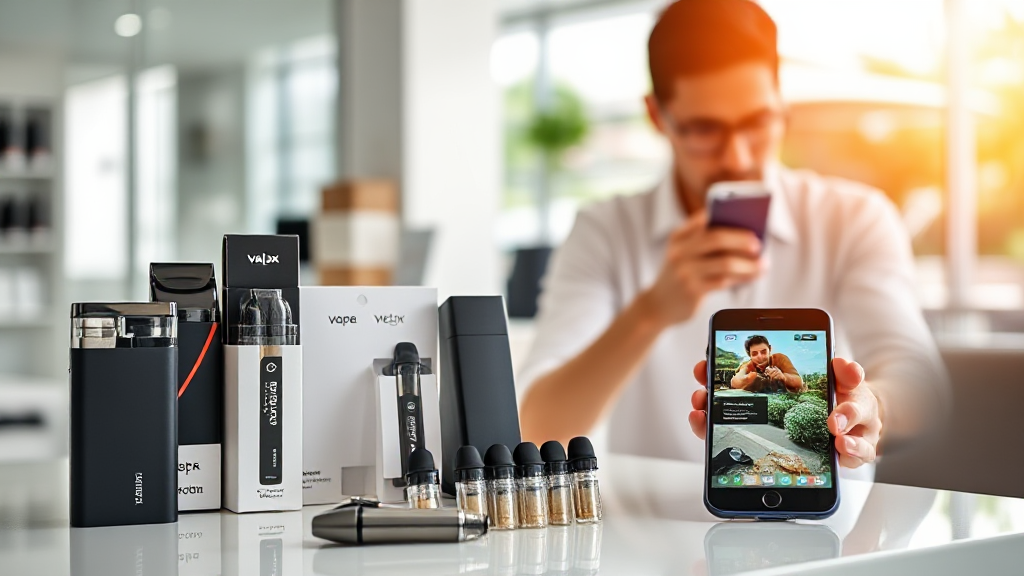
Planning Your Vape Supply Spend Without Chasing Every New Arrival
A predictable ordering rhythm usually costs less than reactive ordering. That is the whole idea behind planning your vape supply spend: decide what you actually use, how often you run out, and which delivery option fits that pattern. If you are searching for lana vape delivery, the practical answer is to treat it as a repeatable supply decision rather than a series of one-off purchases triggered by a new flavour or a late-night shortage.
Reactive buying feels convenient because each order is small. Over a month, though, those small orders add up through add-ons, duplicate devices and delivery fees you did not plan for. A simple rhythm fixes most of that without requiring a spreadsheet or a strict budget.
Why a repeatable order pattern beats reactive buying
Most overspending on vape supplies comes from timing, not from the products themselves. When you order only after something runs out, you are shopping under pressure. Pressure buying tends to include extras: a second device “just in case”, a flavour you have not tried, or a larger pack because it feels more efficient in the moment.
A planned pattern reverses that. You order before you run out, from a short list you already trust, and you skip the browsing phase that invites add-ons. The goal is not to spend as little as possible on any single order. It is to make each order predictable enough that you can see what a month of supply actually costs.
Start with usage, not with products
Before comparing devices or flavours, estimate how long a single disposable or pod actually lasts you. Most people overestimate this at first. Track it for two or three cycles by noting the date you start a device and the date it stops performing well. That number, not the product listing, is the foundation of your ordering rhythm.
Once you know your realistic cycle length, ordering becomes a scheduling question. If a device lasts you roughly a week, ordering every three weeks keeps a small buffer without tying up money in stock you will not touch for months.
Set a reorder trigger instead of a reorder date
Fixed dates are easy to forget, and they break when your routine changes. A reorder trigger works better: for example, order when you open your last sealed device, or when you have two left. The trigger travels with your actual usage, so it stays accurate even in a busy month.
Pair the trigger with one reliable supplier so the delivery window is predictable. That is where a consistent vape supplier singapore option matters more than chasing the lowest listed price on any given day.
Building a short, repeatable order list
The second half of spend control is limiting what goes into each order. A short list of known products removes the decision fatigue that leads to impulse buys. It also makes it easier to notice when a product you rely on is consistently available versus occasionally out of stock.
Your list does not need to be permanent. Review it every few months and change one item at a time. Rotating everything at once makes it impossible to tell whether your spend changed because of the products or because of your habits.
Separate staples from experiments
Treat your regular device and pod as a staple and anything new as an experiment with its own small allowance. For example, if you normally order two devices per cycle, keep that as the staple line and allow one trial item only when you have deliberately decided to test something.
This separation is useful because it keeps novelty from quietly becoming the default. A new arrival is not a problem on its own; the problem is when it replaces a planned purchase instead of sitting alongside a fixed one.
Match the delivery option to the order size
Small, frequent orders and larger, less frequent orders behave differently once delivery is involved. If you are ordering a single item repeatedly, a fast SG Vape same day delivery service makes sense for genuine shortages. For routine restocking, a planned order that covers several weeks usually gives you more control over the total.
Decide in advance which situations justify a fast delivery and which do not. Writing that rule down once, even informally, prevents the “I will just order it now” decision from becoming your default.
Resisting add-on creep without feeling restricted
Add-on creep is the slow expansion of every order: one extra device, a new flavour, a spare pod you did not need yet. It rarely feels like overspending in the moment because each addition is small. Across a few months, it is usually the largest source of unplanned spend.
The practical fix is not willpower. It is making the default order complete on its own, so the add-on has to justify itself against a plan rather than against an empty cart.
Use a one-item rule for new arrivals
When something new catches your attention, add it only if you are willing to remove something else from the same order. This keeps the total stable and forces a real comparison. If the new item is not worth replacing a staple, it is probably not worth adding either.
Many shoppers find that most new arrivals fail this test and only a few become regulars. That is normal, and it is exactly the filtering you want before novelty turns into a recurring line item.
Watch the cost of convenience, not just the product
Delivery convenience has real value when you are genuinely out, but it should be a deliberate choice rather than a habit. If fast delivery becomes your default for every order, you are paying a premium to solve a problem that planning would have prevented.
One workable approach is to reserve quick delivery for emergencies and use planned orders for everything else. Over time, the number of emergencies tends to fall because your reorder trigger catches shortages earlier.
Keep a simple record of what you actually used
You do not need a detailed ledger. A short note of the date, the item and whether it lasted as expected is enough. After two or three months, patterns appear: which device you return to, which flavour you regret, and how often you ordered more than planned.
This record is also the fairest way to review your own history. It shows whether your spend changed because of price or because of frequency, and those two problems need different fixes.
Reviewing your history and adjusting the plan
A plan you never review slowly drifts away from your actual usage. Set a light review every quarter: look at how many orders you placed, how many were planned versus reactive, and which items you would not buy again. The point is to adjust one or two things, not to rebuild the whole system.
If your reactive orders are still high, your reorder trigger is probably too late. If your planned orders keep growing, your staple list has likely absorbed too many experiments. Both are easy to correct once you can see them.
Choose a supplier you can plan around
Planning depends on availability and delivery reliability as much as on your own habits. A supplier with consistent stock of the products you actually use makes the rhythm work; an inconsistent one forces you back into reactive buying. This is why many shoppers settle on one dependable Singapore vape delivery option and build their order pattern around it rather than shopping around every cycle.
When you do need a quick restock, knowing that the same supplier offers sg vape delivery removes a layer of uncertainty. You are not searching for a new source under time pressure, which is exactly when unplanned spending happens.
Keep the plan flexible enough to survive a busy month
Rigid plans fail because life is not rigid. Build in a small buffer, such as one spare device, so a busy week does not turn into an emergency order. The buffer costs a little upfront but usually replaces a more expensive reactive purchase later.
Similarly, if a product you rely on is temporarily unavailable, substitute from your staple list rather than using the gap as a reason to try something entirely new. The plan should bend, not break.
If you are still narrowing down which products belong on your staple list, it helps to compare a few reliable options such as Sg vape disposable formats and pod systems before committing. A short comparison now saves repeated changes later.
The underlying discipline is simple: order on a rhythm, keep the list short, and let new arrivals earn their place. Whether you are restocking a familiar sg vape lana product or trying a single alternative, the decision should fit a pattern you chose in advance. That is what turns vape supply spending from a series of impulses into a cost you can actually see coming.





Leave a Reply